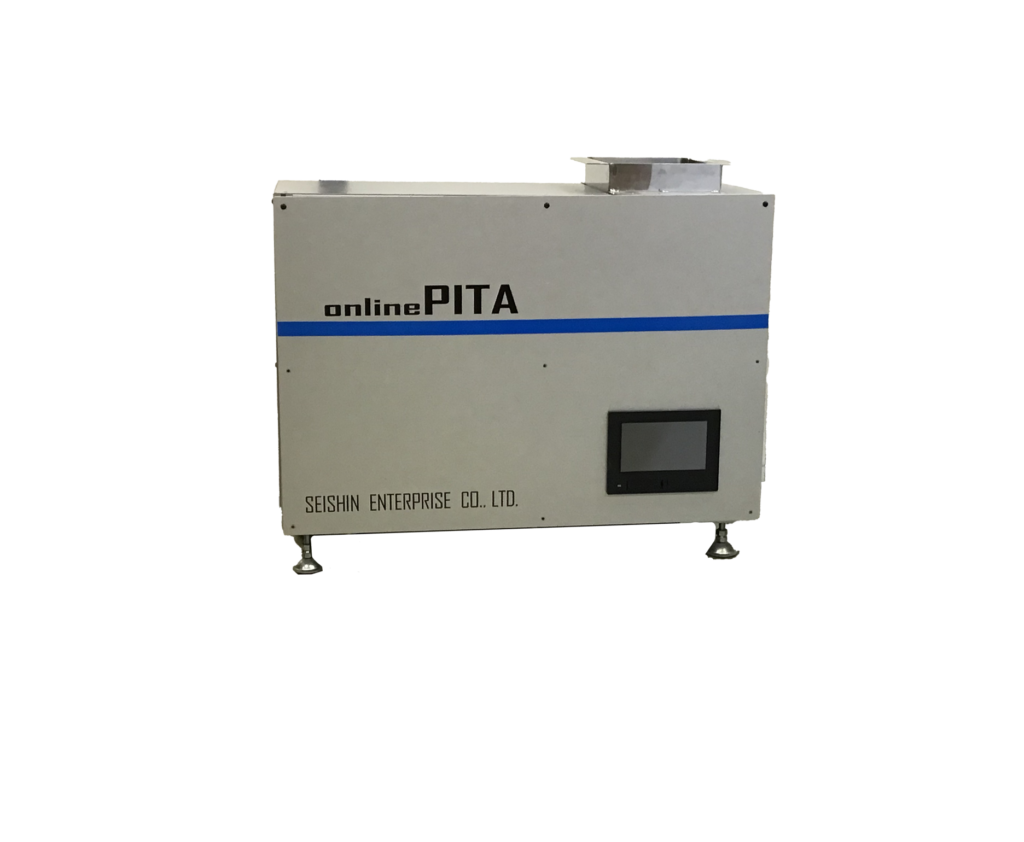
Precise particle sizing demands careful configuration of imaging settings to deliver consistent, trustworthy data in both research and industrial contexts
Whether your samples include fine drug particles, stable colloids, or geological mineral clusters
the quality of your particle size data depends heavily on how well your imaging system is configured
Poor parameter choices can lead to over or underestimation of particle dimensions, misidentification of agglomerates, or failure to detect fine particles altogether
Your first decision should center on magnification settings
If magnification is too weak, sub-micron particles disappear from view, compromising data integrity
Excessive zooming reduces sampling breadth, potentially biasing results due to insufficient particle count
The optimal magnification balances sufficient resolution to resolve individual particles with a broad enough field to capture a representative sample of the population
Validating pixel-to-length conversion via certified references is non-negotiable for metrological accuracy
The illumination setup profoundly influences measurement fidelity
Uniform, diffused illumination minimizes glare and shadowing, which can distort particle edges and lead to incorrect boundary detection
For semi-transparent samples, rear illumination creates clear silhouettes, improving particle-to-background differentiation
For opaque particles, darkfield or oblique lighting may be more effective in highlighting surface features without oversaturating the image
Avoid direct, intense point sources that create hotspots or uneven exposure, as these can cause false edges or wash out fine details
Fine-tuning exposure duration and sensor gain is vital for optimal image quality
Slower shutter speeds boost signal quality yet compromise clarity in dynamic or suspended samples
Brief exposures eliminate motion artifacts but often yield grainy, high-noise images under dim lighting
Disable auto-gain to ensure reproducible intensity levels between different runs
The goal is to achieve a grayscale distribution that clearly separates particle intensity from the background without clipping highlights or losing shadow detail
Measurement accuracy is fundamentally limited by the system’s spatial resolution
A high-megapixel sensor is useless if the lens cannot resolve finer features
Mismatched optics and sensors produce moiré patterns or loss of sharpness
The pixel size must be small enough to sample the smallest target particle with 5–10 pixels per diameter for accurate shape and size analysis
Focus is another non-negotiable parameter
A barely out-of-focus image introduces measurable bias, 粒子形状測定 making particles seem artificially enlarged
Employ autofocus algorithms or manual adjustment using a sharp edge standard to maximize clarity throughout the field
Depth of field limitations mean that thick samples may require z-stacking to capture all particles in focus, especially in 3D particle distributions
The success of particle detection depends heavily on intelligent thresholding and background handling
Fixed thresholds may work for homogeneous samples but fail with variable particle contrasts
Adaptive thresholding, which adjusts locally based on surrounding pixel intensity, often yields better results in complex or heterogeneous samples
Manual verification of segmentation output against the source image prevents false positives and missed detections
Finally, sample preparation must support accurate imaging
Ensure particles are uniformly suspended with no clumping, and dilute sufficiently to prevent occlusion
When particles touch or overlap, they are incorrectly counted as one larger particle
Use dispersants, sonication, or dilution as needed, and always document preparation methods to ensure reproducibility
In summary, selecting the right imaging parameters is not a one-time setup but a dynamic process that requires iterative optimization based on sample properties and measurement goals
All imaging variables are interdependent; altering one often requires recalibrating others
Documenting all settings and validating results against known standards ensures that your particle sizing data is not only accurate but also trustworthy for decision-making in research, quality control, or regulatory compliance