What Does 'Queued but No Chop' Mean in Singlish — And Why So Sensitive?
Short Answer: In Singlish, 'Queued but no chop' means someone lined up for something (usually food) but didn't mark their place — i.e., nilsgroup.co.kr never put a tissue packet, umbrella, or other chopping item to reserve their spot. In Singaporean queue culture, this is a major faux pas, especially at hawker centres. You queue, but you never chop? Aiyo, later someone cut your line then how?
TL;DR Summary: Must-Know in 5 Bullets
- 'Queued but no chop' is a classic Singlish expression combining Singaporeans' love for food and queue etiquette.
- It refers to queuing without placing any object (chop) to reserve your spot — risky move sia!
- Commonly seen at hawker centres, food courts, or fashion crowded public areas during peak hours.
- 'Chopping' with a tissue packet is practically law for locals — don't play play!
- This guide dives into the unofficial etiquette, emotional triggers, and how to expertly chop like a true blue Singaporean.
Introduction: The Significance of 'Queued but no chop' in Singlish
If you've ever tried to dabao lunch at Tiong Bahru Market at noon, you know this phrase hits harder than sambal on a sore throat. 'Queued but no chop' isn't just a funny Singlish line – it's a whole cultural episode worthy of its own Channel 5 drama. This humble phrase carries layers of meaning, emotion… and a bit of steam if you're the one who kena cut.
'Chop' in Singaporean lingo means more than just what your barber does to your fringe. It's the act of reserving your place — whether in a hawker center queue or on a seat — by leaving an item behind. And if you queued but didn't chop? Wah, steady lah, but also a bit ah beng. You might end up arguing with an auntie who arrived five minutes later, but clever-clever chopped the best table.
So let's deep dive into this very local, very amusing, very real situation Singaporeans encounter almost daily — and maybe help you level up to Master in this Singlish term and hawker etiquette.
Understanding Singaporean Queue Culture
Singaporeans love to queue. It's almost a sport. Got new bubble tea opening? Minimum 2-hour queue. Someone say free ice cream? Don't need directions – just follow the line. But the real MVPs of queues are the hawker centres where proper queue etiquette matters most.
Our love for queuing isn't because we boh eng (nothing to do) or style because we kiasu lah (okay, maybe small-small kiasu). It's rooted in deep-seated respect for order, fairness, and the unspoken rule of 'I come first, I eat first.' Even if you see the same uncle there every day queuing for chicken rice, don't try to cut. He recognise liao hor.
Queue culture is an unspoken yet strict code — cross it, and you kena stink eye faster than can say 'extra chilli please.' This queuing behavior is essential to surviving Singapore's competitive hawker center scene.
The Importance of 'Chopping' and How to Navigate Hawker Center Queues
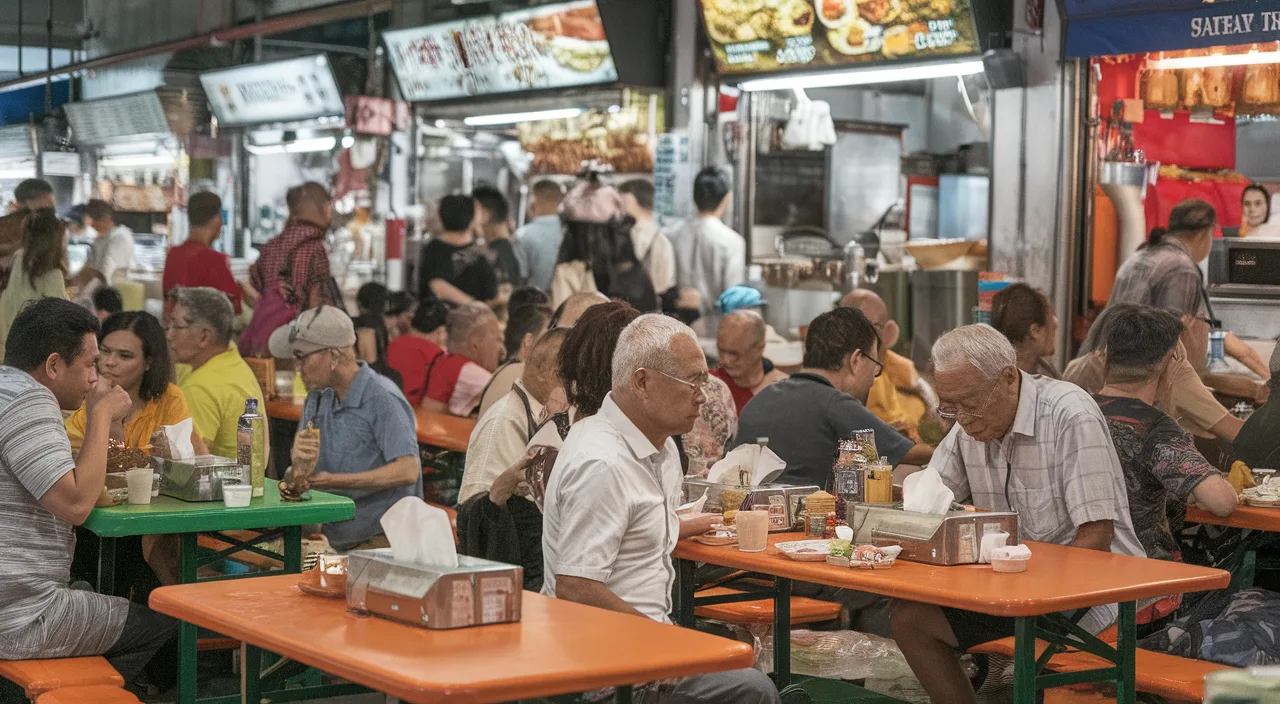
Every Singaporean grows up with a silent superpower: the ability to identify whether a table has been chopped from 10 feet away. One glance, and you know: Empty plate = got someone, Tissue packet = off limits, Rain-soaked umbrella = confirm got auntie buying nasi padang. Understanding hawker center queues is crucial for any food lover in Singapore.
What is 'Chopping' Exactly?
'Chop' means to reserve with a personal item. Most common: a humble tissue packet. Why tissue? It's cheap, it's visible, and it won't break your heart if someone steals it. Alternatives include lanyards, name cards, caps, umbrellas—even a stranger's child in extreme cases (ok lah, joke only).
Types of Chopping and Their Levels of Risk:
- Tissue Pack Chop (S-Tier): Culturally accepted in hawker centers, plus it sends a passive-aggressive signal that you claim liao.
- Wallet/Earbuds Chop (Crazy Move): High risk, potentially high reward. Only for those who trust in humanity.
- Just Told My Friend "I Chop": Verbal chopping = zero protection. Later queue dispute you confirm GG.
Point is, if you didn't chop, it's like queuing with invisible ink — you're technically there, but nobody can see you. This is why proper seat reservation is essential in Singapore's hawker culture.
Etiquette in Singaporean Queues: Dos and Don'ts
If you really want to avoid getting the side eye from the kopi uncle, here's a basic primer on hawker etiquette and how to behave in queues in SG:
Do:
- Wait Your Turn: No pretending to look at the menu when you're actually eyeing an opening in the hawker queue.
- Respect Chops: Even if it looks like a sad tissue half blown away, unless you see a fairy placing it there, assume it's a valid chop.
- Ask Nicely If Unsure: 'Eh got people sitting here ah?' goes a long way. Use the national tone: neutral but wary.
Don't:
- Remove Someone's Chop: This act is almost criminal in hawker centers. Prepare for a full-blown kopi-splode.
- Cut Queue While 'On the Phone': You might trick auntie, but not the Ah Beng in line behind her. Justice will come.
- Fake Chop: Placing a tissue then going to queue elsewhere = considered queue hacking. Tsk tsk.
Basically, if you act blur with Singapore queue culture, you might kena blur back.
Surviving Long Queues in Singapore: Tips and Tricks
So you're in line at Old Airport Road Hawker Centre and the woman ahead is exchanging lost stories of her ex-husband with the uncle at stall #59. Welcome to the queue limbo. Here's how to survive hawker center queues:
Tip #1: Chop First, Queue Later
If you're eating in, always grab a table first. No chop? No queue. Because carrying five plates around with no table is low-key panic attack material. This is basic hawker etiquette 101.
Tip #2: Bring A 'Queue Buddy'
Coordinate with a friend to take turns queuing and table-hunting in hawker centers. More effective than any ERP system.
Tip #3: Know the Peak Hours
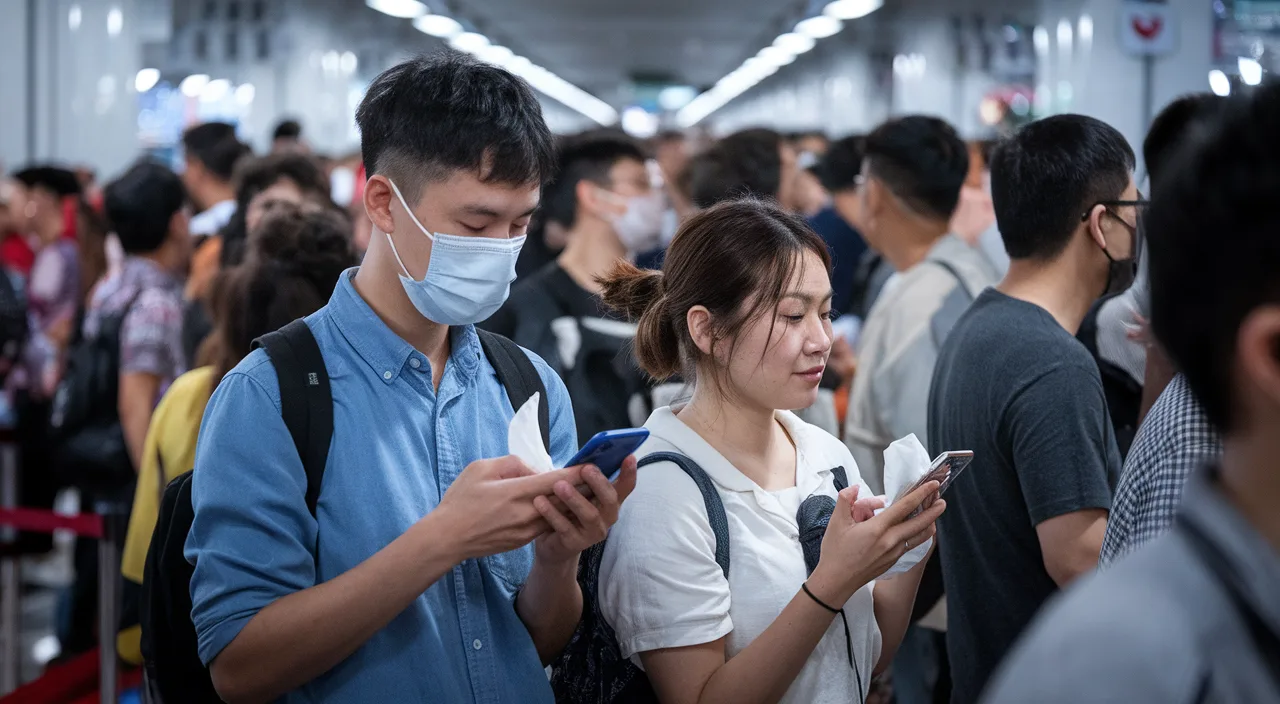
Lunch rush is 12 - 2 PM. Dinner? 6:30 - 8 PM. Avoid or be prepared to wait behind 20 other fellow foodies in Singapore queues.
Tip #4: Watch and Learn
If unsure whether someone's chopping or ghosting, look around. Most Singaporeans can smell a 'fake chop' from a kilometre away. Just blend in and copy their sia behavior when navigating hawker culture.
Final Thoughts: Chop Like a Local or Forever Wait
The phrase 'Queued but no chop' isn't just Singlish — it's a lifestyle warning. In the bustling, buzzy hawker scene of Singapore, understanding this phrase means you've unlocked a hidden level of local gameplay. Whether you're jio-ing lunch kakis, dabao-ing for grandma, or just reliving childhood in Bedok Interchange hawker, remember: Queue you can, chop you must.
The next time you see an empty table with a lone tissue packet on it, don't second guess. Respect the chop — or prepare to duel with a very persistent auntie holding economic bee hoon and a lifetime of queue-score receipts. Master these hawker etiquette rules, and you'll never face another 'Queued but no chop' disaster again.
Frequently Asked Questions
- 1. What does 'Queued but no chop' mean in Singapore?
It means someone queued for food or a spot but didn't leave an object behind to mark their place. - 2. Is 'chopping' seats with tissue packets legal?
Not legally binding lah, but socially accepted. It's a cultural norm. - 3. Can I remove someone's 'chop' if they're taking too long?
No. Wait or ask politely. Removing is asking for scolding, sibei jialat. - 4. How long does a 'chop' last before considered invalid?
Depends. Usually about 10–15 minutes. Beyond that, up to individual stall auntie to decide. - 5. What items are best for 'chopping'?
Tissue packets, umbrellas, lanyards, small bags — low value but visible items. - 6. Can tourists use this system too?
Of course! Tourists can chop too. Just don't use high-value items — later kena stolen then heart pain. - 7. Where did this 'chopping' culture come from?
Evolved naturally from Singaporeans' love of efficiency, order, and certainty — plus, no one wants to eat standing.